The first time I stepped foot onto the Appalachian Trail, with the commitment to hike the entire Trail over multiple years, I thought the greatest challenges I would experience would be climbing mountains through a seemingly endless forest full of trees, with an occasional overlook along the way.
I was simply expecting to live days on end in the forest, surrounded by God’s creation.
I never gave much thought to who—or what—had existed along this magnificent footpath stretching from Georgia all the way to Maine, long before the Appalachian Trail was ever a dream in the mind of visionary Benton MacKaye.
While my 11-year journey backpacking the Appalachian Trail was full of surprises and the unexpected, one thing I never imagined discovering was the history—and, more specifically, the lives of the people who existed, thrived, and died along the very stretches of ground where my own feet were stepping.
One historic encounter has stayed with me ever since.
It was a beautiful fall hike through the southern portion of Pennsylvania with my three hiking partners. We walked through several state parks on that trip, but the one that left me pondering what I saw and learned long after we continued on our journey was Pine Grove Furnace State Park.
Within the park was the Ironmaster’s Mansion, now used as a hostel for Appalachian Trail hikers and other visitors. Fortunately, staying there for the night was already on our agenda.
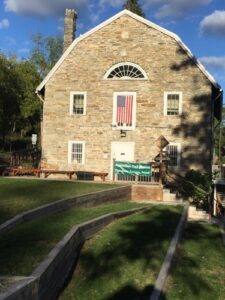
But what I wasn’t expecting was a private tour into some of the “behind-the-scenes” history of the mansion.
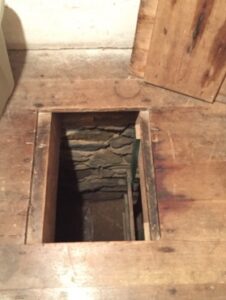
We were taken down into the bowels of the mansion, where we were shown a small, stone-walled room. We were told that the mansion had once been part of the Underground Railroad and that this hidden space had temporarily sheltered people escaping slavery as they made their way north toward freedom.
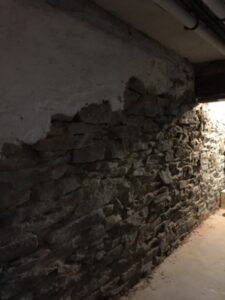
I stood there trying to imagine the people who may once have occupied that small room.
As we left the mansion the next morning and continued our hiking journey, my thoughts kept returning to what I had unexpectedly seen.
Some of my greatest worries on the Trail were whether I would be warm enough as the temperatures dropped through the night, or whether it would rain before we finished hiking for the week.
My own personal freedom—not to mention my daily comforts in life—has rarely been challenged.
I simply cannot imagine what it must have felt like for people escaping slavery, moving from one place of refuge to another, making their way toward possible freedom while never knowing if they might be captured before reaching it. Their fear went far beyond discomfort. They feared for their lives and even faced the possibility of death.
And that is just the tip of the iceberg of the stories hidden along the Trail.
What did these people experience along their journey? Did they see loved ones lose their lives while theirs were spared? How long did it take them to finally reach freedom? Did they have their children with them?
Each of these people had a personal story to tell.
And their lives mattered.
As I sat down years later to write my memoir trilogy, Facing Fear Through Faith, I learned about many other once-thriving communities of people who lived along what is now the Appalachian Trail, long before the Trail itself existed.
Sadly, many of these communities are no more.
Learning about them has created a passion in my heart to never take our communities for granted—whether it’s a community I’m simply visiting or driving through, or the one where I currently live.
Our communities are more than buildings and businesses.
They are made up of the lives of people who have value—even after they are long gone.
And each of those individuals has a story to tell.
My prayer is that those stories never get lost to time.
If you would like to read this story and many others in their entirety, you can do so by digging into the Facing Fear Through Faith memoir trilogy.
To view this hike in its entirety, you can go to the Photo Journal page to view this hike and all the others too!